
McAllen Directory Collection Shelf
The City of McAllen's historic-preservation guide identifies a real local shelf rather than one all-purpose online database. Wilmot's and Johnson's are the named McAllen city directory runs. Cole's Cross adds an address-first route, while Lower Rio Grande Valley telephone books broaden the search beyond the city. Ask the holding library to confirm a particular volume and any gaps before making a special trip.
| McAllen directory source | Verified run | Holding location | How to use it |
|---|---|---|---|
| Wilmot's McAllen City Directory | 1951–52 to 1968 | McAllen Memorial Library | In-house reference consultation |
| Johnson's McAllen City Directory | 1970–1982 | McAllen Memorial Library and Hidalgo County Historical Museum | Local-history reference or archive inquiry |
| Cole's Cross Directory | 1960 to date in the city guide | McAllen Public Library and UTRGV Special Collections | Reverse, address-to-occupant searching |
| Lower Rio Grande Valley telephone books | 1923 to date in the city guide | UTRGV Special Collections | Regional subscriber and address context |
| Hidalgo County tax rolls | 1852–1910 | UTRGV Special Collections | Earlier owner and tract context |
Those dates are verified holding descriptions, not a promise that every annual issue survives. The guide does not provide a complete volume-by-volume gap list. It also separates a regional telephone book from a McAllen-only directory, so a listing may identify a Valley subscriber rather than every household in the city.
McAllen Directory Archive Routes
McAllen Public Library keeps genealogy and reference material for in-house use. Its main branch is at 4001 N. 23rd Street, and the published main-line number is (956) 681-3000. Current posted hours are Monday through Thursday 9 a.m. to 9 p.m., Friday and Saturday 9 a.m. to 6 p.m., and Sunday 1 p.m. to 9 p.m. Call before visiting about a specific Wilmot, Johnson, or Cole's volume, because the city guide identifies the runs but does not reproduce each physical shelf list.
The regional alternative is UTRGV Special Collections & Archives in Edinburg. Its reading room at University Library, 1201 W. University Drive, is open Monday through Friday 8 a.m. to 5 p.m., with Saturday access by appointment. The collection takes online research requests and includes books, maps, newspapers, ledgers, photographs, archival collections, and border-studies material. That route is especially useful when a city directory search leads into older tax rolls or a Valley-wide telephone book.
The UTRGV reading-room and remote-research page is the source shown here.

Its archive scope explains why a McAllen city directory search can continue into maps, newspapers, and regional records without assuming that all material has been digitized.
Note: Reference and genealogy material at the local library is non-circulating, so confirm access rules before relying on a volume for a time-sensitive search.
For a broader directory gap, the Texas State Library and Archives Commission city-directories reference guide identifies a U.S. directory collection spanning 1822–1995 through on-site Ancestry Library Edition and HeritageQuest access. TSLAC does not provide phone or email transcriptions from those volumes. It is a useful comparison route when the local shelf has a missing year, but it does not replace a check of the named McAllen holdings.
Ask the local library whether its current digital-resource access can supply the same title before treating a statewide catalog result as proof that a McAllen volume is immediately available.
McAllen Directory Newspaper Trail
When a directory year is missing, a newspaper can supply a dated move, death notice, business notice, or civic item. The McAllen Public Library partner collection at the Portal to Texas History was listed with 2,089 digital items when reviewed. Its title facets included 1,798 McAllen Daily Press records and 174 McAllen Daily Monitor records, with the largest concentration in the 1920s. Search results based on OCR need a second look at the page image, particularly for accented characters and surname variants.
The library also offers free obituary research from archived The Monitor microfilm. A request needs the deceased person's name, death date, and death location, and the library does not promise a particular microfilm year range. That makes the service a useful endpoint for a family-history trail, not a substitute for checking the directory volume itself.
The Portal to Texas History's McAllen collection is pictured below.
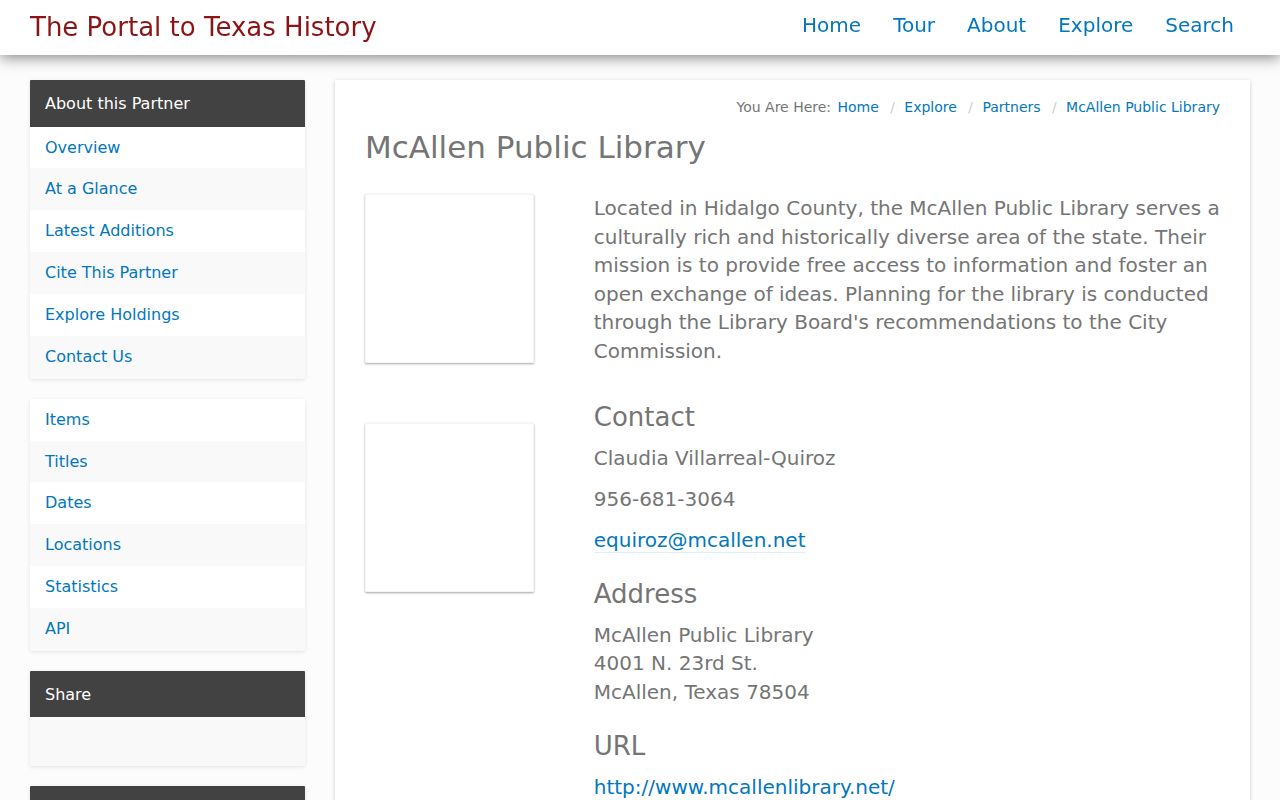
Digital newspaper facets can narrow a city-directory name search by title, decade, county, and collection before the matching page image is verified.
McAllen Directory Clues Beyond Town
A McAllen listing does not mark the edge of a family's local record. UTRGV holds Hidalgo County tax rolls from 1852 through 1910, which predate McAllen's 1911 incorporation and may be organized around a tract, abstract, ranch, or later subdivision rather than the modern city name. The city guide also points to county deed records at the Edinburg courthouse. Keep the original spelling of a place and legal description when moving between these sources.
The Hidalgo County Historical Commission is another preservation route. The McAllen Genealogical Society and Hidalgo County Historical Society ranch cemetery survey, created in 1987 from 1979–1987 survey work, survives as a 123-page UTRGV digital PDF. It can supply a rural cemetery or family-name lead when an urban city directory stops at the city line. It is not a citywide burial register.
The Historical Commission preservation resource is shown here.
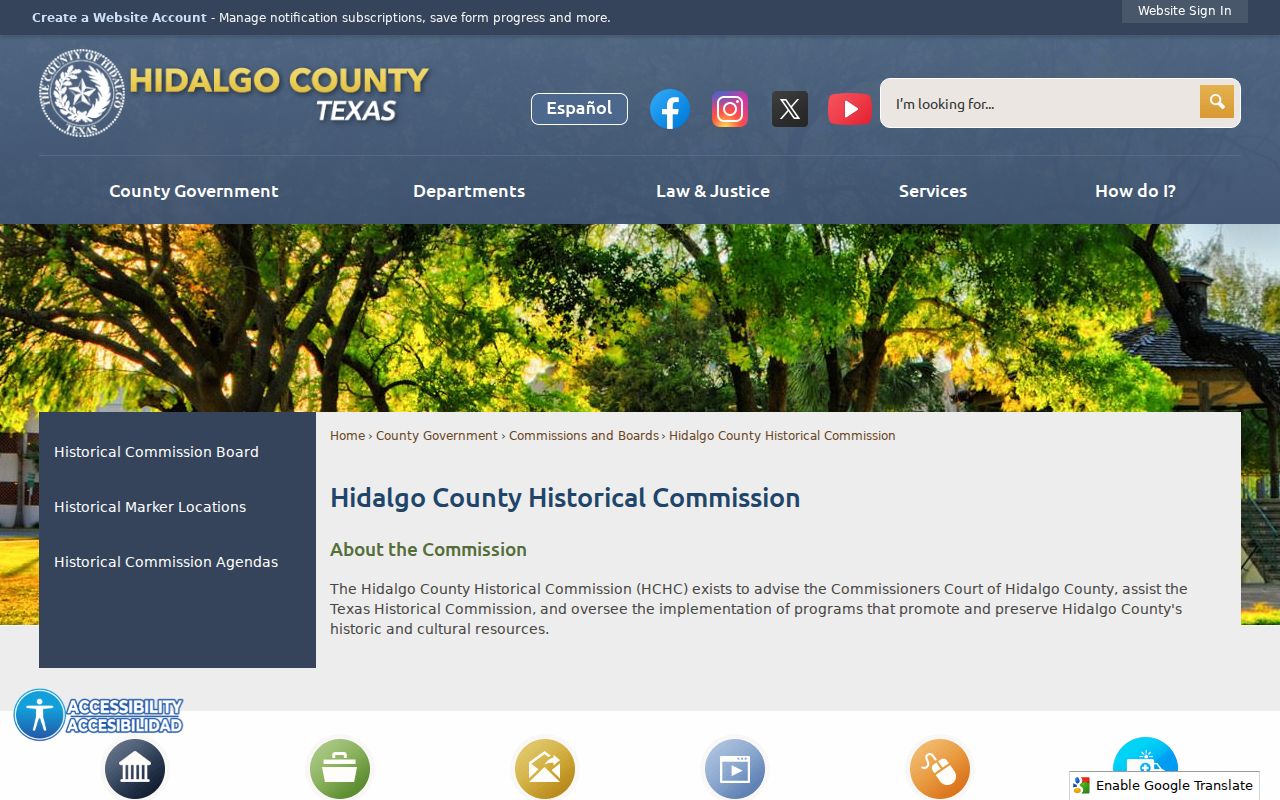
Use its preservation context to locate supporting archives, then verify any burial or family conclusion with the relevant custodian or original record.
Read a McAllen Directory Entry
City directories are compact, but they are not standardized forms. The official sources identify the McAllen titles and years without providing a public scan of a Wilmot, Johnson, or Cole's entry. Inspect the opening legend and the actual page before assigning a meaning to a mark. Common fields worth recording are listed below, but a field belongs in the notes only when it is visible in that volume.
| Indexed name | Record the spelling, initials, and page or volume year exactly as printed. |
|---|---|
| Household notation | Capture any spouse or household wording only when the entry supplies it. |
| Occupation or organization | Use it to distinguish similar names, then compare it with other dated records. |
| Street address | Copy the address and the printed street style before normalizing it for a modern search. |
| Telephone or status mark | Record it only if printed, together with the volume's own legend. |
- Criss-cross directory
- A reverse section that begins with an address or street and points to an occupant or listed business.
- Householder index
- An alphabetical listing centered on the person or household named by the publisher, rather than on every person at an address.
- Abbreviation key
- The volume's explanation of its marks and shortened words. Photograph or transcribe the key before interpreting an entry.
Do not supply a McAllen-specific abbreviation key from memory. The inspected research did not expose one online, and a missing name may reflect the volume's coverage, the spelling used, or an unlisted listing rather than a firm conclusion.
McAllen Directory Name Variants
McAllen searches often need more than one spelling. Local names can appear with Spanish double surnames, accents, maiden or married forms, initials, and Anglicized given names. Start with the printed form, then repeat the search with punctuation removed, surname order changed, and plausible given-name variants. A newspaper OCR query benefits from the same approach.
For an address search, try the exact number and street, then the number with an abbreviated street type, then a street-name scan when the volume is arranged by street. Cole's Cross is the stronger address-first tool, but its city-guide description begins in 1960 and does not establish that every year is available. A present-day address trail belongs on the McAllen street directory route, where parcel and deed records are handled separately from the historical shelf.
Trace a McAllen Directory Household
Follow one household through nearby years, not simply one surname through every database. The strongest comparison records the name as printed, address, household notation, phone number when present, and any occupation or organization wording. A directory tracks a listing at a point in time. Federal census schedules describe a household in a different way, so the two sources should be compared rather than treated as duplicates.
- Start with a confirmed name or address in a Wilmot, Johnson, Cole's Cross, or telephone-book volume and record the exact year.
- Search adjacent available directory years, noting changed street addresses, initials, surname forms, and household wording.
- Use Cole's Cross for the same address and nearby numbers, while keeping a listed occupant separate from a property owner.
- Pair the interval with the 1900, 1910, 1920, 1930, 1940, 1950, or 1960 federal census when that schedule is publicly available.
- Use a newspaper image, obituary request, cemetery survey, probate record, or later deed to test why the listing changes or ends.
The federal individual schedules through 1950 follow the 72-year public-release rule. Compare address, age, relationship, and household structure, because an address in a directory does not prove that every census household member appeared in the listing.
McAllen Directory Record Timeline
McAllen's record sequence is layered. The dates below help choose the next source without inventing a digital cutoff where the research found none.
| 1852–1910 | Hidalgo County tax rolls at Special Collections provide earlier land and owner context. |
|---|---|
| 1911 | McAllen incorporated, so older evidence may use county, ranch, tract, or abstract language instead of a city label. |
| 1923 onward | Lower Rio Grande Valley telephone books add regional listed-subscriber context. |
| 1951–52 to 1982 | Wilmot and Johnson provide the named McAllen printed runs, with their stated year spans. |
| 1960 onward | Cole's Cross adds reverse address searching in the city guide's stated run. |
There is no official online McAllen directory-entry scan or complete annual-survival list in the reviewed sources. The city directory work remains strongest when an original volume, the library, and the regional archive are used together.