
McAllen Previous Residents by Record Era
The backward trail begins with one modern parcel and reaches across different record eras. County tax rolls can lead into early land history. Deeds document transfers. Directories and telephone books add listed households or subscribers between conveyances. Census schedules describe a household, while permits and maps help date the building or address. Each source should be read for the limited fact it actually supplies.
| Source for past residents | Verified local coverage | Holding route | What it can establish |
|---|---|---|---|
| Hidalgo County tax rolls | 1852–1910 | UTRGV/UTPA Special Collections | Taxable owner, land, tract, or abstract context |
| County deed records | Historic courthouse books; web start year not stated | Hidalgo County Clerk in Edinburg and the official records portal | Grantor, grantee, transfer date, and legal description |
| Valley telephone books | 1923 to date in the city guide | UTRGV/UTPA Special Collections | Regional listed subscriber and address context |
| Wilmot's McAllen City Directory | 1951–52 to 1968 | McAllen Memorial Library | Mid-century listed household or business address |
| Cole's Cross Directory | 1960 to date in the city guide | McAllen Public Library and UTRGV Special Collections | Reverse address-to-occupant checking |
| Johnson's McAllen City Directory | 1970–1982 | McAllen Memorial Library and Hidalgo County Historical Museum | Later printed city-directory interval |
| Federal census | Individual schedules through 1950 | National Archives and approved databases | Household composition, age, relationship, and enumeration geography |
| McAllen permits | Current portal; start year not posted | City Accela portal | Permit type, dates, inspections, and applicant details |
| Sanborn maps | McAllen holdings confirmed; edition years not listed | UTRGV, McAllen Library, and Library of Congress search | Building footprint, use, and street or block continuity |
Start with the era closest to the question. A 1900 tax-roll reference may use a tract rather than a modern street. A 1923 phone listing can be regional. A permit can date work on a building but does not establish that the applicant lived there.
Start McAllen Address Records
The Hidalgo County Appraisal District property search is the fixed point for a McAllen address. Record the current taxable owner, account or geo identifier, situs address, mailing address, legal description, subdivision, lot and block, abstract, and jurisdictions. The situs is the property location. A mailing address is where tax correspondence goes and may be a prior address, an organization, or a representative, so it is not proof of who is physically present.
HCAD advises simplifying an address to the street number and street name, leaving off a prefix or suffix. Its owner-name tips allow either “Lastname, Firstname” or “Lastname Firstname,” and an account search needs the exact account number. Save the parcel wording before altering it for another search. The legal description is often more durable than a street label when a subdivision or address has changed.
The City of McAllen GIS can then place the parcel beside corporate-limit, development, zoning, flood, school, HOA, census, and transportation layers. It provides map context, not a substitute for a recorded deed or an appraisal-roll correction. Use the parcel's identifiers, not map appearance alone, to carry the research forward.
Trace McAllen Records From Deeds
The Hidalgo County Official Records Search connects a parcel to the legal owner-to-owner chain. Its current banner showed records certified through August 24, 2026, but the inspected portal did not give its oldest online index year. Search results are not proof that no earlier instrument exists. When the web index stops, use the same legal description at the Edinburg courthouse or ask the County Clerk about deed books, microfilm, archived images, or an unindexed book.
The official-records search page appears below. Its single Search Term can cover grantor, grantee, subdivision, document type, or document number. Recorded-date fields can narrow a search. Index-only searching is the safer choice for indexed names; full-text OCR can find a phrase within a document but needs image verification.
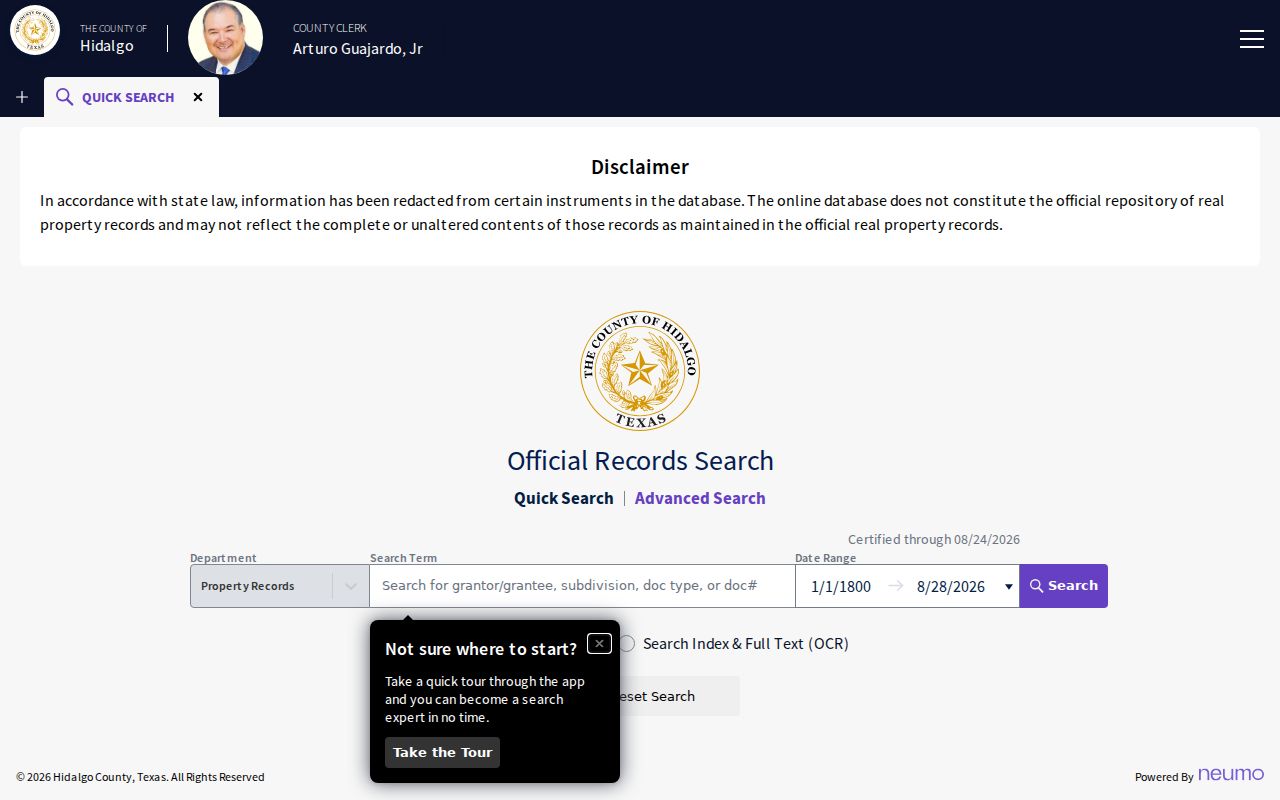
Use the shown controls to identify a candidate instrument, then preserve the index facts and inspect the image before linking it to the McAllen parcel.
- Copy the current parcel's owner, account or geo ID, subdivision, lot and block, abstract, and legal description from HCAD.
- Search the current owner as grantee in the County Clerk portal and identify the acquisition instrument.
- Record the grantor, grantee, recording date, document number, legal description, and any image availability from the likely deed.
- Search that prior grantor as grantee in a date window ending before the current acquisition, then repeat the process for the earlier conveyance.
- When the description changes, search the lot and block phrase, subdivision, abstract, survey, and relevant plat before assigning it to the modern parcel.
- Grantor
- The person or entity transferring an interest in the recorded instrument.
- Grantee
- The person or entity receiving that interest. In a backward chain, the previous grantor can become the next person to search as a grantee.
- Chain of title
- The sequence of recorded transfers tied together by the same legal description, not merely a repeating street address.
- Legal description
- The formal lot, block, subdivision, abstract, survey, or tract wording that identifies the land in a deed.
Note: A transfer can cover only part of a tract, so do not turn one deed into a conclusion about an entire block or every person who lived there.
McAllen Address Changes
Street words are helpful, but the parcel description carries more weight in a long property history. An older instrument may use a subdivision lot and block, an abstract, or a survey description that does not resemble the present address. Search both forms. Plats can connect lot boundaries, streets, easements, and blocks, while GIS helps compare a plat with a modern parcel.
No official source reviewed supplied a specific McAllen street-renumbering or renaming year. That gap matters. When an address disappears, test street-name variants, exact directory wording, subdivision and lot/block terms, the legal description, a Sanborn map, and a historic plat. Ask McAllen Planning, GIS, or the library for an existing record rather than inventing a conversion.
McAllen Cole's Cross Occupants
Cole's Cross Directory is the bridge between ownership and the people listed at an address. The city historic-preservation guide describes its run as 1960 to date and identifies McAllen Public Library plus UTRGV Special Collections as holding routes. Begin with the exact address and nearby numbers, then pivot into the alphabetic section. Record the year and the entry's actual wording.
Wilmot's McAllen City Directory covers 1951–52 to 1968, and Johnson's runs from 1970 to 1982. Those printed sources can fill mid-century intervals that deeds do not describe. The collections, locations, and entry-reading limits are detailed with the McAllen city directory collections. A directory listing establishes a listed name or household marker for its volume date, not a complete occupancy roster.
Date McAllen Previous Residents With Maps
The City of McAllen's Accela permit portal offers public searches for records, applications, building permits, planning cases, and property information. Permit results can supply an application or permit number, site address, type, dates, inspection status, and applicant information where public. A permit gives a building or alteration date, but the applicant may be an agent or other representative. Treat it as date evidence, not proof of a past household.
Sanborn fire-insurance maps add the physical layer. The official city guide confirms McAllen maps through UTRGV/UTPA Special Collections and online through the library. The Library of Congress Sanborn search guidance explains that records can identify city, edition date, sheet count, notes, and digital availability. Exact McAllen edition years and a complete online sheet index were not found in the inspected sources. Compare a located sheet's street spelling, block orientation, footprint, outbuildings, and labels with the parcel rather than assuming every map is digitized.
Past McAllen Residents in Census and News
Directories answer who was listed at an address in a given volume. Census schedules can add household composition, ages, relationships, occupation, and enumeration geography. Federal individual schedules are public through 1950 under the 72-year release rule. Pair a directory year with the closest available census year, then compare rather than merge the entries. A household can change between the census date and a later directory issue.
The McAllen Public Library Portal to Texas History collection supplies a local newspaper trail. At inspection, it listed 1,798 McAllen Daily Press items and 174 McAllen Daily Monitor items. Those pages can identify moves, death notices, sales, civic activity, and property notices. The library's free obituary research uses The Monitor microfilm when the request includes the deceased name, death date, and death location. Verify every OCR hit against its page image.
The local newspaper collection is shown below.
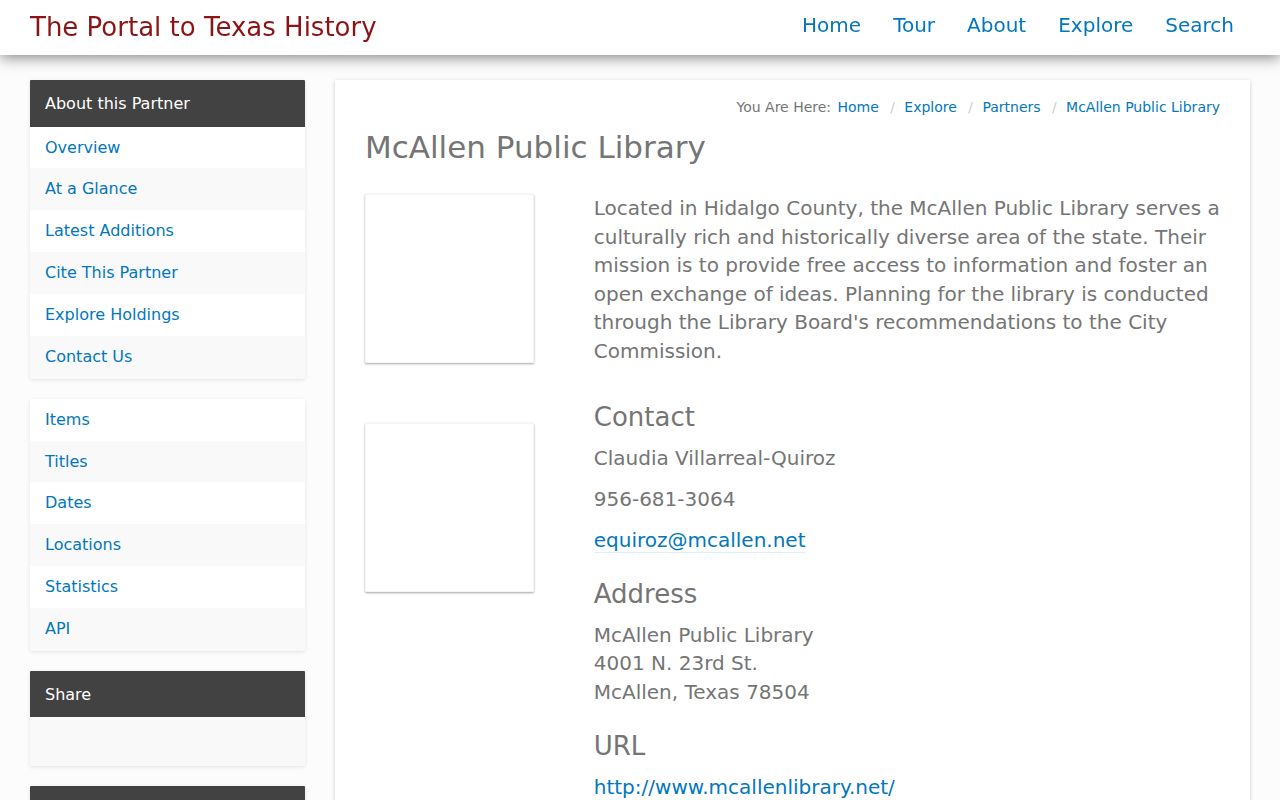
Its title and decade facets help place a past McAllen household beside a directory or census year without treating a newspaper search result as final proof.
- Match a directory volume to the closest open census year and record both dates.
- Compare street or enumeration geography, surname variants, household relationships, and age patterns.
- Search newspapers for a move, death, marriage, property notice, or civic mention in the interval.
- Use probate, a later deed, a cemetery source, or a vital index to test the endpoint of a person's trail.
McAllen Archive Research Help
McAllen does not advertise one house-history portal in the reviewed sources, but the city historic-preservation guide provides a practical checklist. It directs researchers to city directories, Sanborn maps, city histories, museums, courthouses, tax offices, title abstracts, church, census, and tax records. It also suggests looking for city-retained building plans or permit prints and seeking photographs or facts from former owners, relatives, or neighbors.
UTRGV Special Collections & Archives accepts online research requests and offers its Edinburg reading room Monday through Friday from 8 a.m. to 5 p.m., with Saturday by appointment. McAllen Public Library provides in-house reference and genealogy access. The Hidalgo County Historical Museum and McAllen Old Timers are additional leads named by the city guide. Use the custodian best placed to hold the original source.
The UTRGV archive and research-request resource is shown here.

Its maps, newspapers, ledgers, photographs, and local-history holdings offer a documented fallback when the online deed index or a printed directory does not reach the needed year.
The Hidalgo County Historical Commission supplies another official preservation contact for records that reach beyond a single McAllen address.
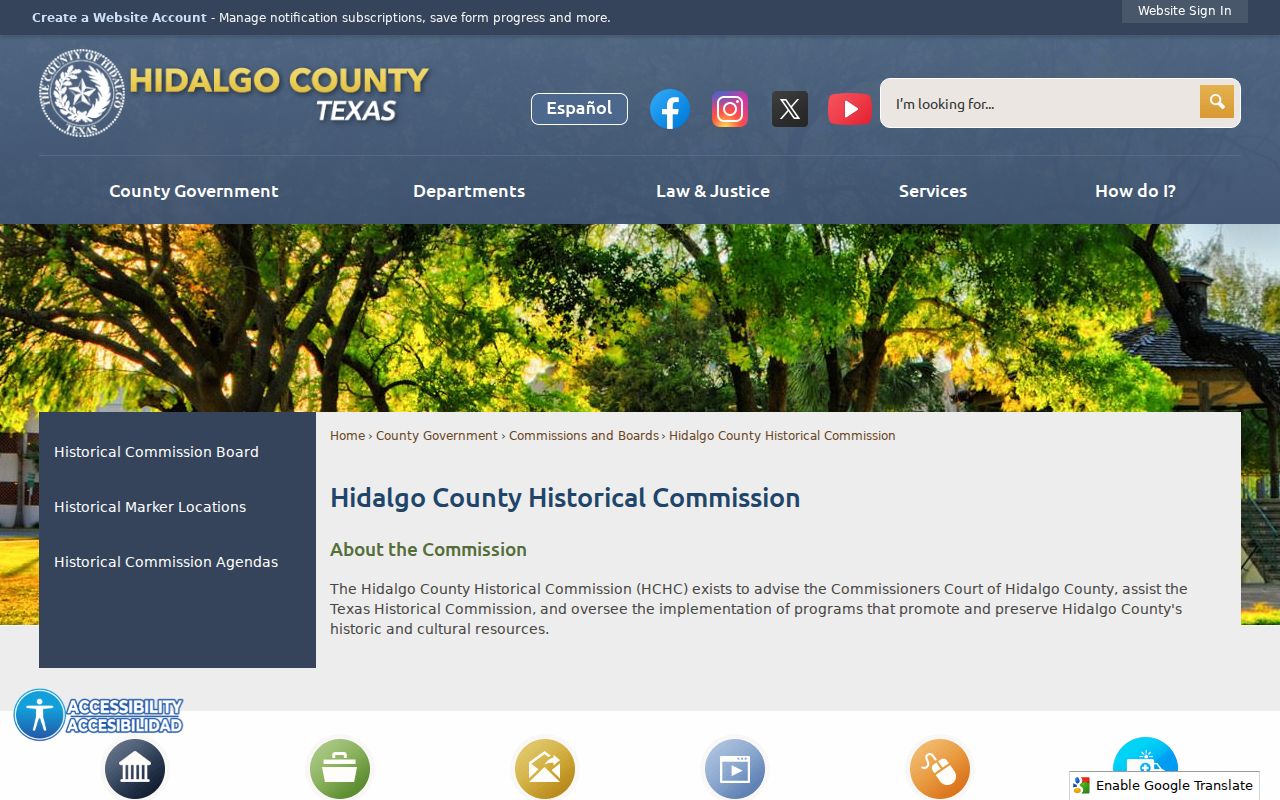
The commission’s preservation role can help identify the appropriate archive or courthouse source when a family or tract trail leaves the online index.
A past resident may be closed by an obituary, probate file, cemetery survey, next deed, or first recorded transfer rather than by a discoverable first-person listing. Record that distinction in the research notes.